
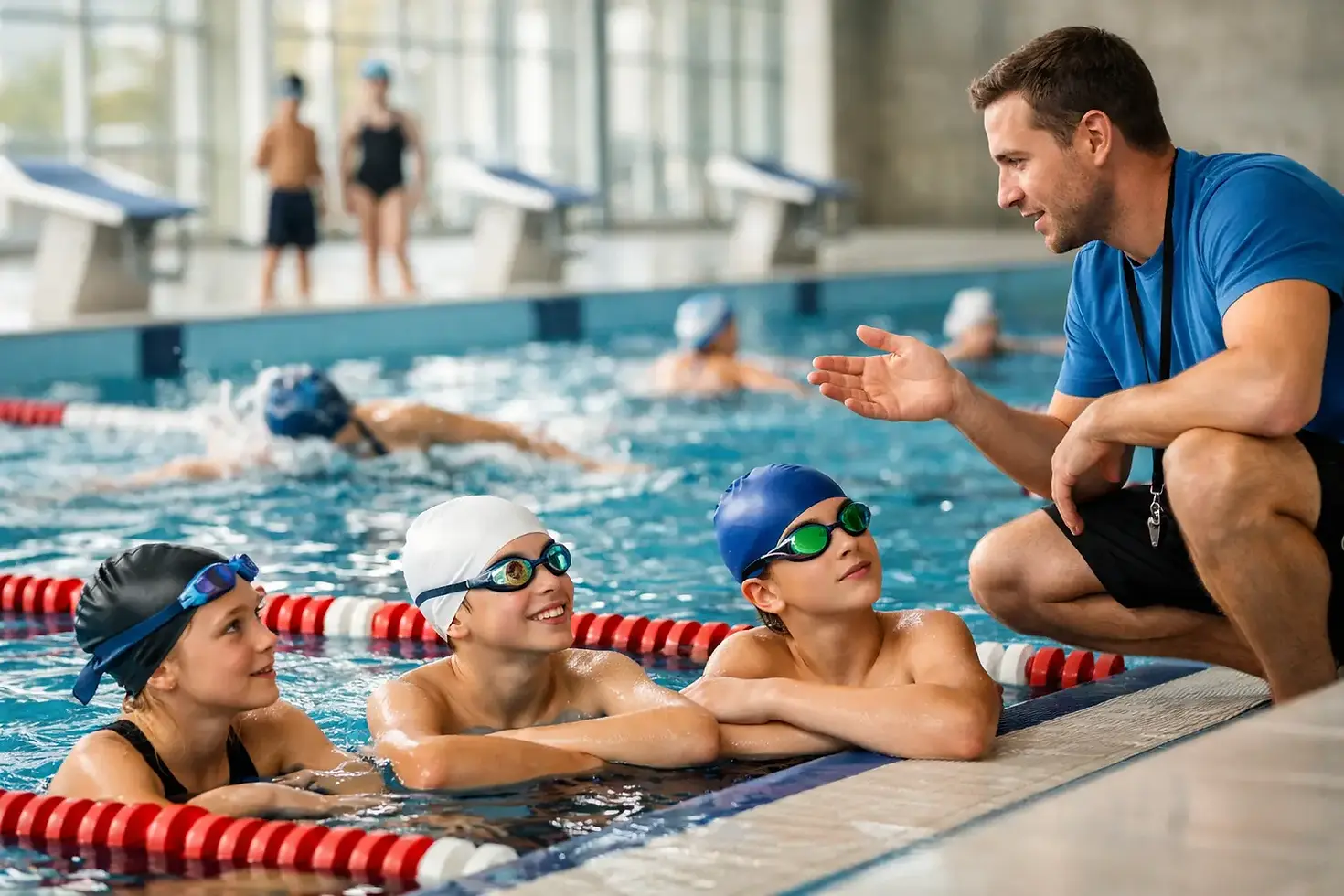
Youth Swim Team Training That Builds Results

A young swimmer can work hard for months and still stall if the training plan is wrong. More yardage does not automatically create better swimmers. In effective youth swim team training, the real difference comes from teaching the right skills at the right time, then building those skills in a structure young athletes can actually handle.
That matters to families because swimming development is not just about race results. It is about confidence in the water, clean technique, smart progression, and a team environment that helps kids stay motivated. When those pieces work together, swimmers improve faster and enjoy the process more.
What youth swim team training should actually do
Good training for young swimmers is not a scaled-down version of senior competition work. Children are still developing coordination, mobility, body awareness, and emotional confidence. If a program pushes intensity before a swimmer has the technical base to support it, progress usually becomes inconsistent.
Strong youth swim team training should first create efficient movement in the water. That includes body position, balance, breathing rhythm, kick timing, and stroke mechanics. Once those habits are improving, training can gradually layer in more volume, more pace control, and more race-specific work.
Parents often look for visible progress, and they should. But progress is not only measured by dropped time. A swimmer who now holds alignment off every wall, breathes without lifting the head, or maintains technique through a full set is moving in the right direction. Those gains usually show up on the clock soon after.
Technique first, then load
Technique-first coaching is sometimes misunderstood as slow or soft. It is neither. It is disciplined. Young swimmers who learn to move efficiently are better prepared for harder training later, and they are less likely to build habits that limit performance.
This is especially true in the early and middle stages of development. A swimmer with a rushed freestyle recovery, a dropped elbow, or poor kick timing can still survive a workout. But surviving a workout is not the goal. The goal is to build a swimmer who can repeat quality movement under pressure.
That is why skilled coaches spend time correcting details that may seem small from the stands. Head position on a backstroke breakout, line off the dive, tempo into a turn, or the timing of a breaststroke kick can change both speed and energy cost. For young athletes, those details are not extras. They are the foundation.
The role of progression in youth swim team training
The best programs do not place every swimmer into the same lane expectations. They organize training in stages, with each group matching the swimmer's current skills, maturity, and readiness for workload. That gives beginners room to learn properly and gives advancing swimmers a clear next step.
A structured pathway also helps families understand what progress looks like. Early groups should focus heavily on comfort in the water, listening skills, basic stroke patterns, and confidence. As swimmers improve, the emphasis can shift toward cleaner turns, stronger streamlines, pacing awareness, and greater repeatability across sets. Later stages can introduce more demanding aerobic work, race strategy, and higher-performance standards.
This kind of progression matters because young swimmers do not all develop at the same speed. One athlete may be physically ready for more training but still need technical refinement. Another may have great feel for the water but need time to build consistency and focus. Good coaching accounts for both.
Why team culture affects performance
Training plans matter, but culture matters too. Kids stay in sports when they feel challenged, supported, and connected. In swimming, where progress can be gradual and much of the work is repetitive, team identity has real value.
A strong youth program should teach more than strokes and sets. It should teach swimmers how to be good teammates, how to handle feedback, how to respect lane space, and how to respond when a practice feels hard. Those habits shape long-term athletes.
For parents, this is one of the biggest differences between casual lesson environments and a serious club setting. A club should still feel welcoming, especially to new swimmers, but it should also create standards. Punctuality, coachability, safe behavior, and consistent effort are part of development. When those expectations are clear, young swimmers usually rise to them.
That is one reason structured clubs like Alpha Swim Club resonate with families who want more than basic exposure to the water. The experience is not random. It is organized around growth.
What parents should look for in a program
If you are comparing swim teams, the first question is not how hard the practices look from deckside. The better question is whether the training matches your child's stage of development.
Look closely at how the program teaches fundamentals. Are coaches actively correcting technique, or mainly running sets? Is there a clear group structure that shows how swimmers move from beginner foundations into more advanced training? Does the environment balance accountability with encouragement?
You should also pay attention to communication. Parents do not need a lecture after every practice, but they should understand the program pathway, expectations, equipment needs, and what success looks like in each group. Clear communication builds trust and helps families commit to the process.
Safety and professionalism matter as well. In youth sport, families should expect organized supervision, appropriate athlete policies, and a coaching culture that treats development seriously. A well-run team makes that visible.
Training volume is only part of the picture
One of the most common mistakes in youth sports is assuming more is always better. In swimming, volume has a place, but only when the swimmer can support it technically and mentally.
For a beginner or early-stage swimmer, three focused practices with quality instruction can be far more productive than five sessions of fatigued repetition. For a more advanced athlete, increased frequency may make sense, but only if stroke quality stays intact and recovery is managed properly.
This is where individual readiness matters. School demands, sleep, growth spurts, and confidence all affect performance. A good youth program understands that athletes are not machines. The goal is steady development, not burnout by midseason.
Meets should support development, not define it
Competition is valuable because it gives swimmers a chance to apply skills under pressure. Meets teach pacing, emotional control, pre-race preparation, and resilience. They also give coaches real information about what is improving and what still needs work.
At the same time, race results should be used carefully with younger swimmers. A best time is exciting, but a tough swim does not mean the training failed. Sometimes a swimmer is learning to race a new event, fixing a major technical issue, or adjusting to a higher training group. Improvement is rarely perfectly linear.
The healthiest approach is to treat meets as part of the learning cycle. Practice builds habits, racing tests them, and coaching turns that feedback into the next phase of training. Kids who understand that process tend to stay more confident and more engaged.
What long-term success really looks like
The strongest youth swimmers are not always the ones who look the most advanced at the earliest age. Long-term success usually comes from athletes who build clean fundamentals, enjoy the team environment, and learn how to train with consistency.
That is why the best youth swim team training does not chase shortcuts. It builds posture in the water, discipline on deck, focus in practice, and trust between swimmer, coach, and family. Speed comes from that base.
For some swimmers, the path leads to higher-level competition. For others, it leads to confidence, fitness, and a lasting connection to the sport. Both outcomes have value. The key is choosing a program that sees the whole athlete and develops them with purpose.
If your child is ready for more than unstructured pool time, look for a team that teaches with intention. The right environment can change how a young swimmer moves, competes, and believes in themselves - and that is where real progress begins.


Comments