
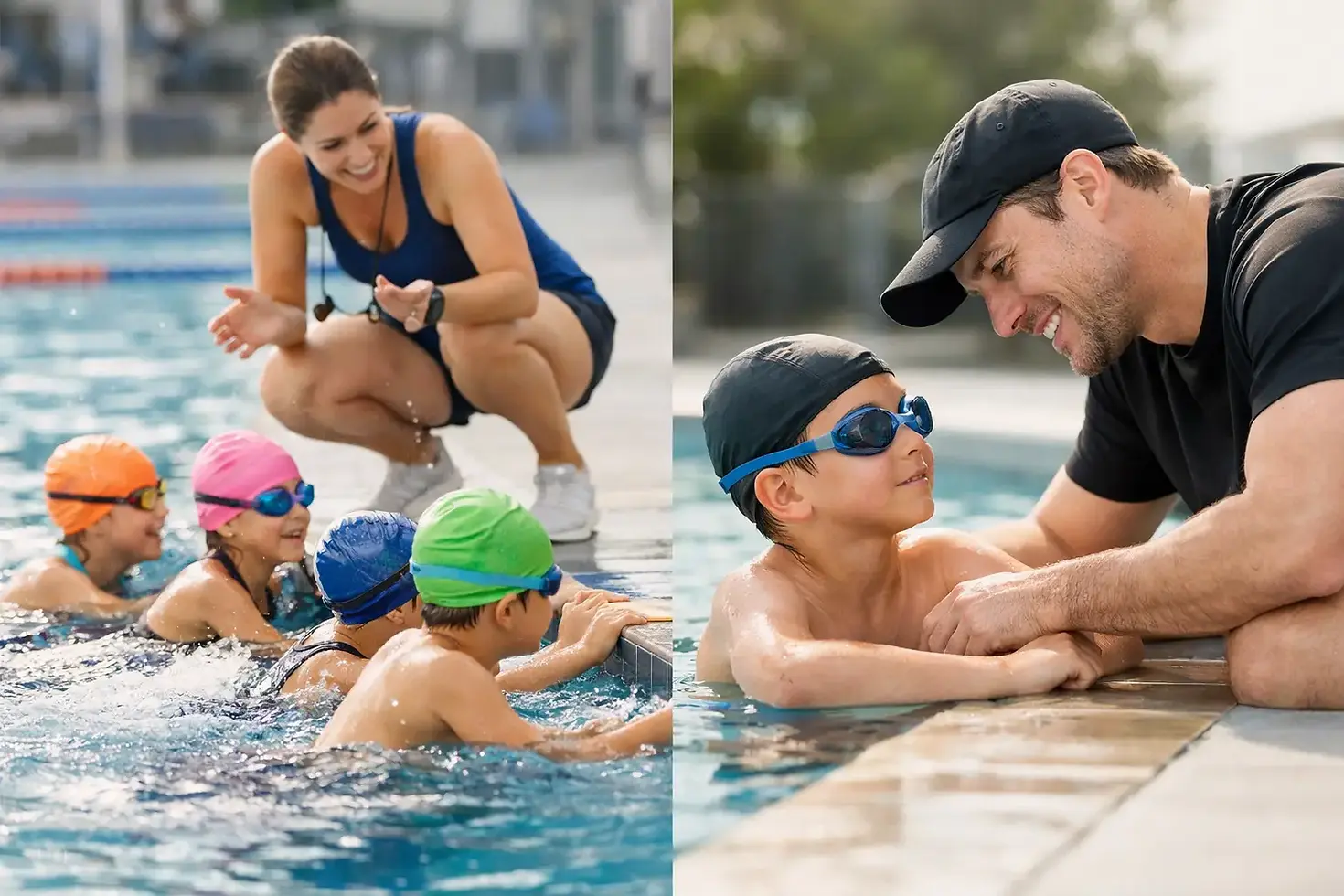
Group Swim Training vs Private Coaching for Kids

A child can swim across the pool and still have plenty to learn. A dropped elbow in freestyle, a rushed breath, or a weak body line can limit confidence long before a swimmer reaches a competitive level. That is why the choice between group swim training vs private coaching deserves more than a quick decision based on schedule or price.
Both formats can help young swimmers improve. The right fit depends on where your child is now, how they learn, what they want from the sport, and whether they are ready to grow alongside a team. For many families, the strongest path is not an either-or decision forever. It is a thoughtful starting point, followed by adjustments as the swimmer develops.
What Group Swim Training Builds
Group training gives swimmers a structured place to practice skills repeatedly while learning how to train with others. A quality group is not simply several children sharing a lane. It is a progressive environment where coaches organize athletes by ability, set clear technical goals, and build each session around purposeful movement in the water.
For young swimmers, that shared environment matters. They see peers streamline farther, hold a stronger kick, or finish a set with focus. This creates healthy motivation without placing the entire spotlight on one child. A swimmer who may hesitate during a one-on-one lesson can often become more willing to try when their lane mates are working toward the same challenge.
Group training also teaches habits that go beyond a single stroke. Swimmers learn to listen for instructions, manage rest intervals, follow a practice routine, and stay engaged while a coach works with another athlete. These are valuable skills for club swimming and for sport in general. Confidence grows when children realize they can contribute to a team while still improving as individuals.
The biggest advantage is consistency. Regular training creates more chances to reinforce body position, breathing patterns, kicking mechanics, turns, and stroke timing. Technique is not built in one correction. It is built through focused repetition, feedback, and another opportunity to do it better on the next length.
Where Private Coaching Can Help
Private coaching gives a swimmer concentrated attention. It can be especially useful when a child has one specific barrier that needs patient, individualized instruction. A beginner who is afraid to put their face in the water, for example, may benefit from a quieter setting and smaller steps. An experienced swimmer may need detailed work on a flip turn, breaststroke timing, or a stroke habit that has become difficult to change.
In a private session, the coach can adjust the pace immediately. There is more room to pause, demonstrate, repeat a drill, and explain the reason behind a correction. That can be a powerful confidence-builder for swimmers who need extra processing time or who are working through anxiety in the water.
Private coaching can also help before a group transition. Some children need a short period of focused skill development before they are ready to participate comfortably in a structured training environment. Others use occasional private sessions as a supplement when they want extra attention on a particular goal.
Still, private instruction has limits. A swimmer may make progress one-on-one but miss the rhythm, endurance, and social learning that come from training with a group. It can also be harder to judge how a swimmer performs when they must share a lane, follow a set, and maintain technique while tired. Those are important parts of long-term development.
Group Swim Training vs Private Coaching: The Real Difference
The main difference is not simply coach attention. It is the type of learning each setting creates.
Private coaching is highly individualized. The lesson can move slowly or quickly according to one swimmer’s needs, making it a strong choice for targeted technical work, water confidence, or a short-term obstacle. Group training is developmental and performance-oriented. It teaches individual skills within the context of repeatable practice, team expectations, and progressive athletic growth.
Parents sometimes assume private coaching is automatically the faster route because the coach works with only one swimmer. That can be true for a narrow skill goal. But faster is not always better if the swimmer needs broader exposure to training habits, peer motivation, and a consistent progression of skills. A child who can execute a drill perfectly in isolation still needs to carry that skill into full strokes, longer swims, and real practice conditions.
The reverse is true as well. Group training is not always the best first step for every child. If a swimmer is deeply anxious, has a major foundational gap, or needs focused support after time away from the pool, a private setting may provide the reset they need.
Choose Based on Your Child’s Current Stage
Start with an honest look at readiness, not just age. A beginner who is comfortable putting their face in the water, floating, kicking, and following basic instruction may be ready for a well-matched group. The group should still have enough structure and coaching support to protect technique from the beginning.
A child who is still building basic water comfort may benefit from more individualized instruction first. The goal is not to keep them private forever. The goal is to create enough confidence and foundational skill that joining a group feels exciting rather than overwhelming.
For swimmers who already have a foundation, group training often becomes the better long-term investment. As practices become more demanding, athletes need to learn how to hold form under fatigue, respond to coaching cues, and take ownership of their effort. Those lessons are difficult to recreate in a fully individual setting.
At Alpha Swim Club, progression is built around placing swimmers in groups that match their current skills and next developmental target. A clear pathway helps families avoid two common mistakes: moving a child ahead before their technique is ready or keeping them in a comfort zone after they are prepared for more challenge.
Consider Personality, But Do Not Let It Set the Ceiling
Personality should influence placement, but it should not become a permanent label. A quiet child may initially prefer private coaching, yet thrive in a supportive group once they know the routine. An outgoing child may love the energy of teammates but still need individual feedback to refine a technical weakness.
Ask how your child responds to challenge. Do they become energized when they see others working hard? Do they need time to process instructions? Are they motivated by teammates, or do they lose focus in a busy environment? The answers can guide the starting format.
It also helps to ask what happens after the session. A good fit leaves a swimmer proud, tired in a healthy way, and interested in returning. A program should challenge children without making them feel lost. Some nervousness is normal when learning a new skill. Consistent dread is a signal to reassess the environment, group level, or support they need.
The Best Answer May Be Both, at Different Times
Families do not need to treat group and private instruction as competing philosophies. They serve different purposes. A swimmer may begin with individual support, move into a group to build consistency and team experience, then use an occasional private session to sharpen a specific skill.
This approach works best when the group program has a real development plan. Extra coaching should support the swimmer’s next step, not replace a lack of structure. If a child needs constant private sessions just to keep up, the group may not yet be the right level. If a child has plateaued on one detail while otherwise thriving with the team, a focused private session can be a smart addition.
Look for Coaching That Protects Technique
Whether you choose a group or private format, the coaching standard matters more than the label. Young swimmers need instruction that emphasizes body position, mobility, efficient movement, breathing control, and safe habits from the start. Poor technique can become harder to correct when children begin training more frequently.
Ask how swimmers are placed, how progress is evaluated, and what the next stage looks like. Look for coaches who can explain what a child is working on in clear language, not just say they are doing well. Families should also feel confident that the program has organized policies, appropriate supervision, and a culture built on respect.
The best training choice gives your child a challenge they can meet today and a clear reason to keep coming back tomorrow. Build the foundation well, let confidence grow, and choose the environment that helps them become a stronger swimmer and teammate one length at a time.


Comments