
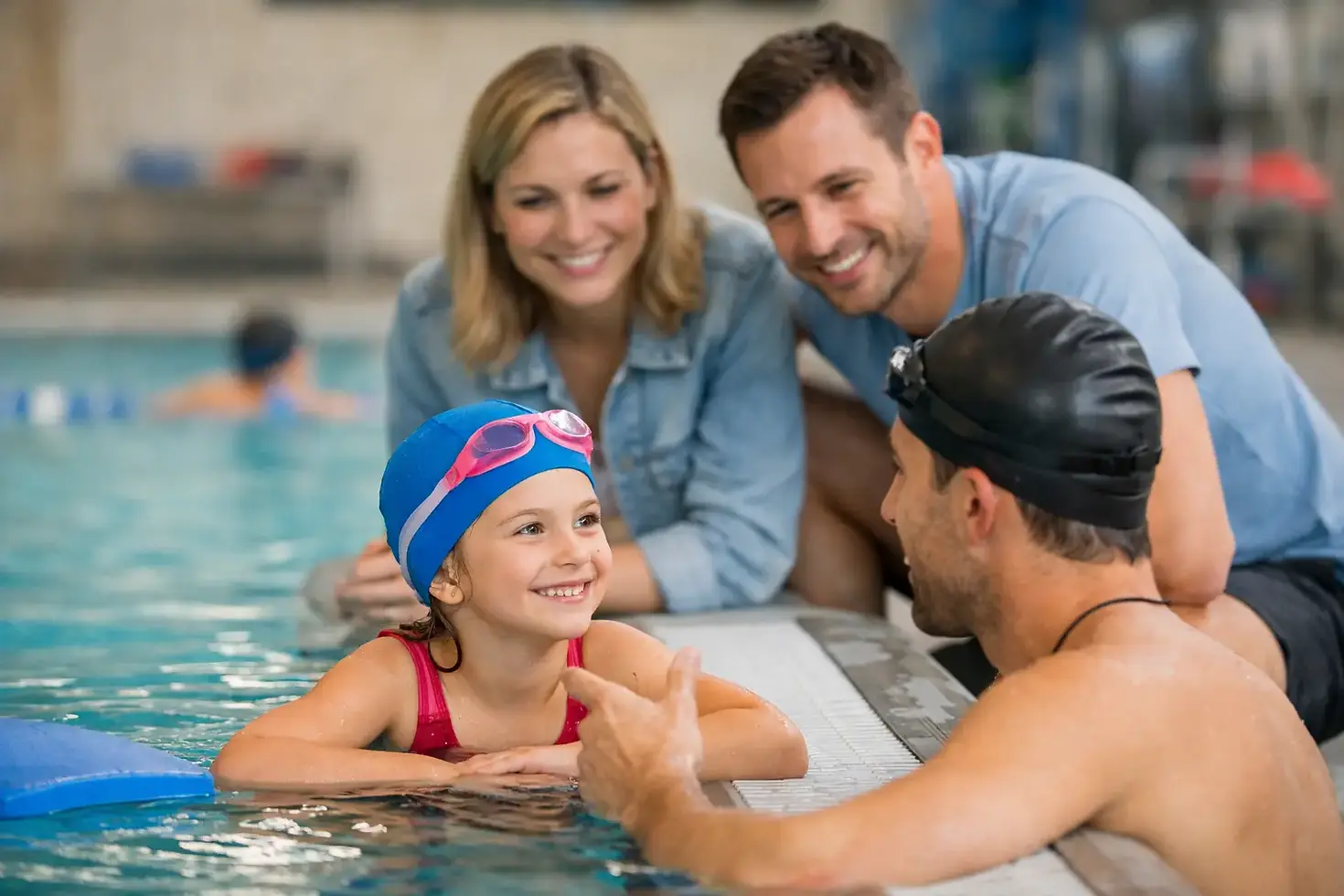
Parent Guide to Swim Assessments for Kids

A swim assessment can feel like a big moment, especially when your child is new to organized lessons or eager to move into a stronger group. This parent guide to swim assessments explains what actually happens on deck, what coaches are watching for, and why an honest starting point gives your swimmer the best chance to grow with confidence.
At Alpha Swim Club, assessments are not about labeling a child as “good” or “bad” at swimming. They are a starting line. Coaches use them to place swimmers where instruction is safe, appropriately challenging, and built around the skills they need next.
What a Swim Assessment Is Really For
A swim assessment is a short, coach-led observation of your child in the water. The goal is to understand their current comfort, safety skills, body control, and technical foundation. That information helps the coaching team select the group and training environment where your child can make meaningful progress.
Parents sometimes expect an assessment to be a pass-or-fail test. It is not. A swimmer may be brave and enthusiastic but still need help with breathing rhythm or floating. Another may move quickly through the pool but need to rebuild stroke mechanics. Both swimmers benefit from placement based on what they can demonstrate today, not what they hope to do next month.
Correct placement matters because swimming skills build on each other. A child who is placed too high may spend every practice trying to keep up, often with rushed technique and growing frustration. A child placed at the right stage gets enough repetition to build real confidence, then moves forward with stronger habits.
What Coaches Look for During an Assessment
The exact activities depend on your child’s experience and age, but coaches generally observe several connected areas. They are looking for how a swimmer responds in the water, not just whether they can make it from one wall to the other.
Water Comfort and Safety Awareness
For beginners, comfort is a major part of the assessment. Can the swimmer enter the water safely? Are they willing to put their face in? Can they recover from a float, hold the wall, or listen for instructions in a group setting?
Nervousness is normal. A child does not need to arrive fearless to succeed in lessons. Coaches pay attention to whether they can be coached through discomfort and whether they regain calm after a new activity. Those are important signs of readiness.
Body Position and Balance
Efficient swimming starts with balance. Coaches watch whether a swimmer can hold a supported front or back float, extend through the body, and keep their hips near the surface. A swimmer who sinks or bends at the waist is not failing. It simply means body position should be a priority before more advanced stroke work.
Good alignment reduces drag and makes every kick and pull more effective. That is why technique-first programs spend time on skills that may look basic from the deck but make a major difference later.
Breathing and Propulsion
Coaches will often look at how a swimmer manages breathing while moving. Can they blow bubbles with their face in the water? Do they lift their head repeatedly? Can they return to a comfortable position after taking a breath?
They also observe propulsion: kicking, arm movement, timing, and the ability to travel with purpose. Speed is only one small part of the picture. A swimmer who moves more slowly with control and sound mechanics may be better prepared to advance than a swimmer who rushes with inefficient form.
Listening, Focus, and Group Readiness
Swimming is physical, but a group program also requires attention and awareness. Coaches consider whether a child can follow directions, wait safely for a turn, respect lane space, and respond to feedback.
This is especially relevant for younger swimmers entering a structured club environment. Group readiness does not mean perfect focus every minute. It means your child can begin learning within a team setting with guidance from their coach.
A Parent Guide to Swim Assessment Placement
After the assessment, placement should reflect the swimmer’s next developmental need. A strong program pathway does not simply separate children by age or by the distance they can swim. It organizes progression around skills, technical consistency, training habits, and readiness for greater challenge.
For a newer swimmer, the right group may emphasize comfort, floating, breathing, kicking, and foundational movement. These early skills establish trust in the water and create the body awareness needed for future strokes.
For a swimmer with basic independence, placement may focus more on freestyle and backstroke coordination, side breathing, streamlines, and consistent distance. As swimmers progress, coaches begin to expect greater technical detail, endurance, turns, underwater work, and training discipline.
There can be trade-offs. Your child may have the endurance for one group but need technical work that is covered more thoroughly in another. Or they may have a beautiful stroke but still need more comfort in a faster-paced lane. Placement should account for the whole swimmer, not one impressive skill.
If the recommended group feels lower than you expected, ask what specific skills would help your child move up. Clear feedback turns placement into a goal rather than a disappointment. The best next step is not always the fastest path on paper. It is the group where your swimmer can build reliable skill and enjoy earning progress.
How to Prepare Your Child Without Adding Pressure
The night before an assessment, avoid turning the experience into a performance test. Your child does not need to prove anything. A calm message works best: “Your coach wants to see what you already know so they can help you learn the right next skills.”
Make sure they arrive with a well-fitting swimsuit, goggles they have used before, a towel, and enough time to settle in. New goggles that leak or an unfamiliar suit can become a distraction, particularly for a beginner. If your child has long hair, secure it in a way that keeps it out of their face.
Before getting in the water, remind them to listen closely, try each activity, and tell the coach if they are worried or unsure. Encourage effort over perfection. A child who attempts a float, asks for help, and tries again gives a coach much more useful information than one who stays silent because they are afraid of getting it wrong.
It can also help to avoid making promises such as “You will definitely be in the advanced group.” Even well-meant comments can create pressure. Frame the assessment as the first step toward joining a team that will help them improve.
Questions Worth Asking After the Assessment
A brief conversation with the coach can give you a clearer view of the placement decision. Ask what your child did well, which skills need the most attention, and what signs will show they are ready for the next stage.
You can also ask how progress is monitored. Some programs use formal evaluation points, while others assess progress continuously during practice. Neither approach is automatically better. What matters is that coaches can explain how swimmers develop and what families should expect from the current group.
If your child has previous lesson experience, share relevant details without trying to direct the outcome. Let the coach know about past groups, comfort concerns, medical considerations, or goals such as preparing for a school team or building confidence around deep water. Context helps, but the in-water assessment should guide the final placement.
When Your Child Is Disappointed
Disappointment can happen, particularly when a child expected to be placed with a friend or in a higher-level group. Give them room to feel it, then bring the conversation back to growth. Every swimmer, including experienced competitors, has skills to refine.
Try language such as, “This is the group where your coach believes you can get stronger right now.” That message protects your child from seeing their placement as a judgment. It also reinforces a healthy athletic mindset: progress comes from showing up, practicing the details, and being ready for the next challenge when the skills are there.
Avoid comparing placements between siblings, teammates, or friends. Children develop at different rates, and swimming experience can vary widely even among swimmers of the same age. The most valuable comparison is between your child’s current skill set and where they were a few months ago.
Your child does not need to walk onto the pool deck already polished. They need curiosity, a willingness to listen, and the courage to try. Bring those qualities to the assessment, and let the right group become the place where their next level starts.


Comments