
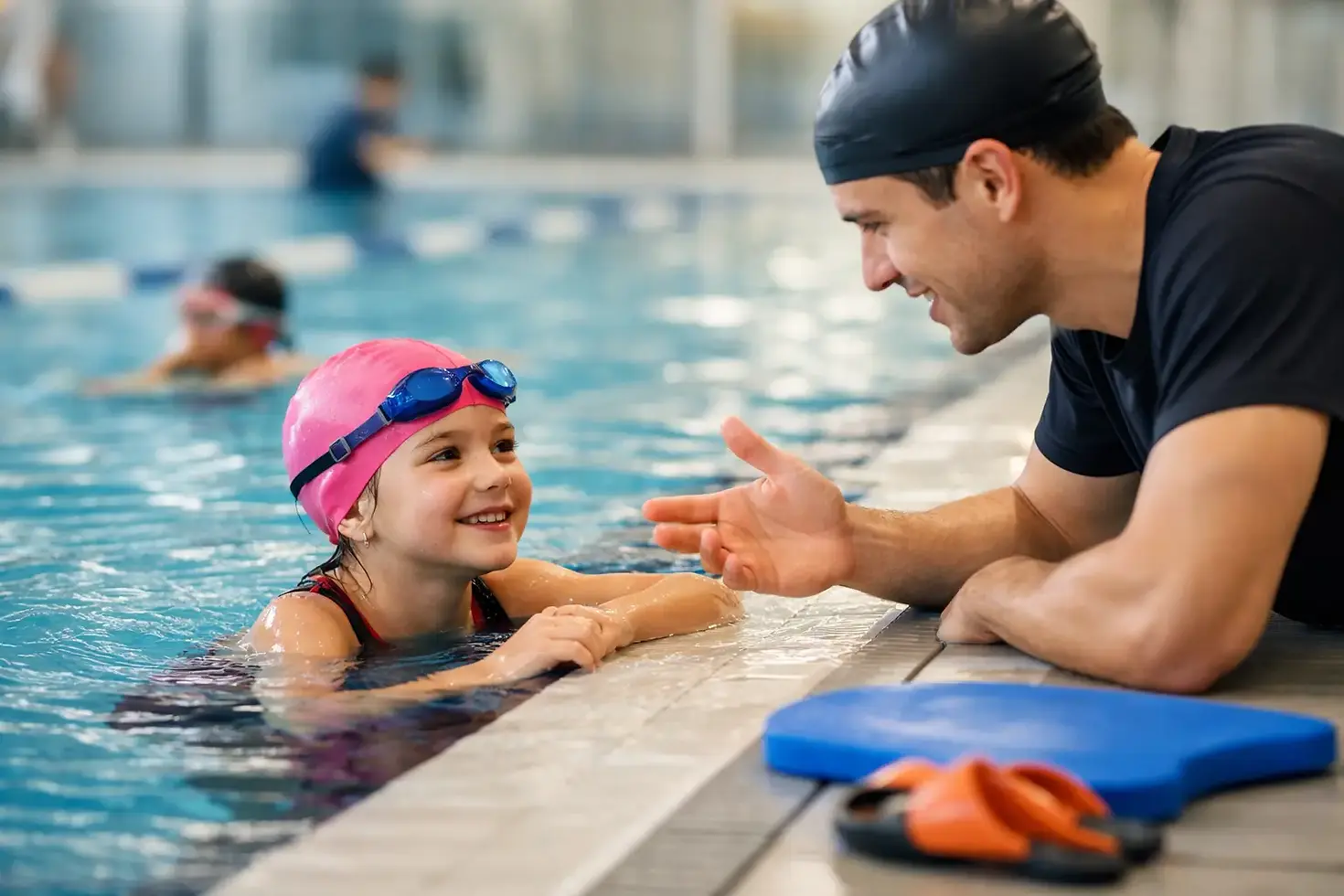
Private Swim Coaching Kids: Is It Worth It?

One child jumps in without hesitation. Another grips the wall, nervous about putting their face in the water. That gap is exactly why private swim coaching kids can be so effective. Some swimmers need repetition and patience at the beginner stage. Others already love the water but need sharper technique, better body position, and more focused feedback to keep progressing.
For families who want real skill development, private instruction can feel like the obvious answer. But it is not automatically the best fit for every child at every stage. The right choice depends on goals, personality, learning style, and what kind of environment helps a swimmer grow with confidence.
When private swim coaching kids makes sense
Private coaching works best when a child needs concentrated attention that a group setting cannot always provide. That might mean a beginner who is anxious in the water, a swimmer who has stalled on a key skill, or a more advanced athlete who needs technical correction in starts, turns, breathing patterns, or stroke efficiency.
Young swimmers often improve faster when a coach can adjust every rep in real time. If a child is dropping their hips, lifting the head too high, or rushing the catch, those habits can be addressed immediately instead of getting repeated for several sessions. That kind of direct correction matters, especially early on. Good technique is easier to build from the start than it is to rebuild later.
Private sessions can also help when a child learns differently than their peers. Some need quieter instruction. Some need more explanation. Some simply need a coach to slow things down and break one skill into smaller steps. In those moments, focused coaching can change frustration into momentum.
What private coaching does well
The biggest advantage is precision. A coach can keep the entire session centered on one swimmer's needs instead of balancing several levels at once. That often leads to faster gains in water comfort, body alignment, kicking rhythm, breathing timing, and stroke mechanics.
Private instruction also gives parents a clearer view of progress. In a structured one-on-one setting, it is easier to understand what the swimmer is working on and what the next benchmark looks like. That clarity matters for families who want more than casual pool time. They want measurable development.
There is also a confidence piece that should not be ignored. Kids who struggle in a group sometimes open up when they have one coach, one lane focus, and one plan. Success comes in smaller, more manageable wins. Once confidence improves, performance usually follows.
For advanced swimmers, private coaching can be valuable because details matter more as they improve. At that level, progress is often less about learning a stroke and more about refining efficiency. A small adjustment to head position or rotation can change the entire feel of the water.
Where private lessons have limits
Private coaching is powerful, but it is not the full picture. Swimming is both an individual skill and a sport built inside a team environment. Kids also benefit from learning how to listen in a group, manage pace alongside others, and stay focused while sharing coach attention.
That is why private instruction should be seen as a tool, not always a complete long-term model. A child may gain technical skills quickly in one-on-one lessons, but still need structured group training to develop consistency, independence, and the social confidence that comes from training with peers.
There is also the question of dependency. If a swimmer only performs well when every correction is immediate and personalized, the transition into a group can feel hard. Strong development usually comes from a balance - enough individual feedback to fix problems, paired with a structured program that teaches kids how to apply those corrections on their own.
Cost and scheduling are practical factors too. Private sessions are a bigger investment, so families should be clear about the goal. If the need is very specific, private coaching can be excellent value. If the goal is broad long-term growth, a progression-based program may offer a better overall path.
Private swim coaching kids vs. group training
This is not really a battle between one format and the other. It is more about matching the environment to the stage of development.
For a child who is fearful, distracted, or missing basic skills, private coaching can create the foundation. It gives the swimmer time to settle in, trust the process, and learn proper movement patterns without feeling rushed.
For a child who is ready to build endurance, routine, and team habits, group training often becomes the stronger option. In a well-run program, swimmers are placed by level, expectations are clear, and the training environment encourages progress without losing accountability.
The strongest setup for many families is not choosing one forever. It is using private coaching strategically, then moving into a structured group where the swimmer can keep building. That approach supports both skill and long-term athlete development.
What parents should look for in a coach
Not every coach who can swim well can teach well. For kids, coaching quality shows up in communication, structure, and the ability to build trust while keeping standards high.
A strong youth swim coach teaches technique from the ground up. They do not just count laps or keep a child busy. They watch body position, timing, alignment, and efficiency. They know when to simplify a skill and when to push for more precision.
Parents should also pay attention to the learning environment. Is the instruction organized? Are expectations clear? Does the coach balance encouragement with correction? The best coaches are supportive, but they are not passive. They know how to challenge young swimmers in a way that builds confidence instead of pressure.
Safety and professionalism matter just as much. Families should expect a program that takes athlete welfare seriously, uses clear policies, and creates a respectful environment for every swimmer.
Signs your child may benefit from one-on-one swim coaching
Sometimes the need is obvious. Sometimes it shows up in smaller patterns over time.
A swimmer may benefit from private coaching if they are nervous in the water, consistently missing the same technical skill, not progressing in a group, or showing talent that needs more detailed development. Another common sign is frustration. If a child wants to improve but cannot quite connect the instruction to the movement, one-on-one coaching can bridge that gap.
It can also help during transitions. Moving from learn-to-swim into more serious training is a big step. So is preparing for club-level expectations. A few focused sessions can make that transition smoother and help a swimmer enter the next stage with better habits.
Why technique-first development matters
For young swimmers, early habits tend to stick. If a child learns to move through the water with poor alignment, inefficient kicks, or rushed breathing, those patterns can limit progress later. Fixing them is possible, but it takes more time than building them correctly from the beginning.
That is why technique-first coaching matters so much. It protects confidence because the swimmer feels more control in the water. It protects progress because each new skill is built on a stronger base. And it protects long-term potential because the child is learning how to swim efficiently, not just how to get from one end of the pool to the other.
This is where a club-style development model often stands out. A serious program does not treat lessons as isolated experiences. It creates a pathway. A swimmer starts with fundamentals, moves into stronger technical work, then grows into more advanced training as skills improve. That kind of structure gives families a clearer future than random lessons with no progression plan.
The best fit is the one that keeps your child moving forward
Parents sometimes ask whether private coaching is worth it as if there is one universal answer. There is not. For one child, it is the fastest way to build water confidence. For another, it is the best way to sharpen details before stepping into a higher-level training group. And for some, it is helpful only for a short stretch before a group setting becomes the better environment.
What matters most is whether the coaching moves your child forward in the right way. Not just faster, but better. Better habits. Better confidence. Better technique. Better readiness for the next stage.
That is the real standard. If a swimmer is getting focused instruction, clear progression, and the kind of support that helps them feel strong in the water, they are on the right path. And when that path is built inside a disciplined, athlete-centered environment like Alpha Swim Club, families are not just signing up for lessons. They are joining a process that helps young swimmers grow with purpose.
Every child starts somewhere. The goal is to make sure their next step is the one that builds real momentum.


Comments