
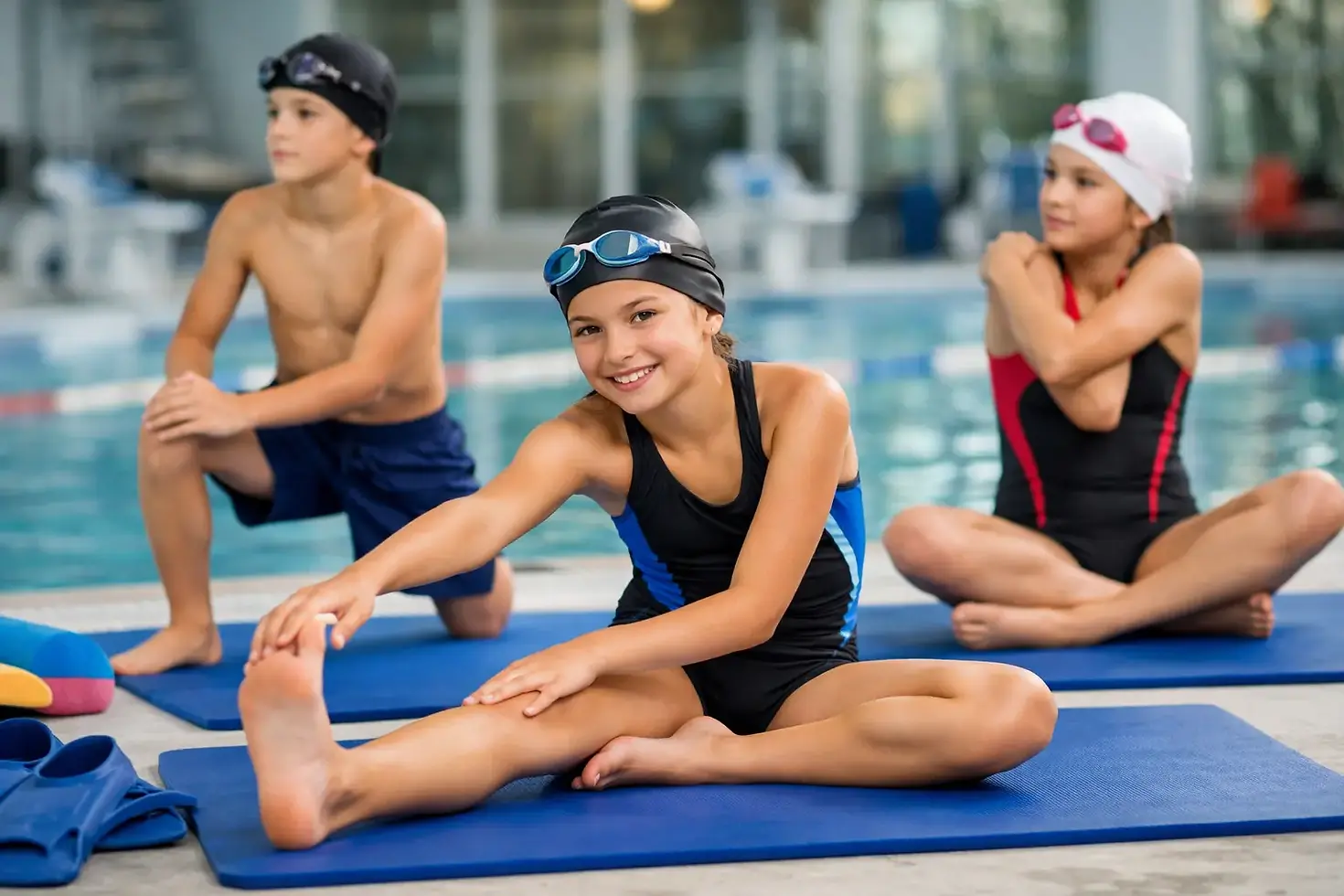
8 Swimmer Mobility Exercises Kids Can Use

A child who fights for a tight streamline or drops their elbows in freestyle usually does not need more effort first. They often need better movement. That is why swimmer mobility exercises kids can do consistently matter so much. When young swimmers move well through their shoulders, ankles, hips, and upper back, technique becomes easier to teach and easier to repeat.
For families, that matters because mobility is not about turning kids into gymnasts. It is about helping them hold cleaner positions in the water without strain, frustration, or compensations that slow progress. In a technique-first program, better movement quality supports better body position, better timing, and more confidence every time a swimmer gets in the pool.
Why swimmer mobility exercises for kids matter
Swimming asks a lot from growing bodies. Freestyle and backstroke need shoulder flexion and rotation. Breaststroke needs hip mobility and ankle movement. Butterfly asks for upper back extension, shoulder control, and coordinated trunk motion. If a child lacks range in one area, they usually borrow motion from somewhere else.
That is when coaches start seeing common patterns. A swimmer arches their low back instead of reaching tall in streamline. Their knees bend too much on flutter kick because the ankles are stiff. Their breaststroke kick gets wide and disconnected because the hips do not open well. None of those issues are fixed by saying try harder.
Mobility work gives young athletes a better starting point. It can improve positions, reduce unnecessary tension, and make technical instruction stick faster. It also helps kids feel more successful. When the body can get into the right shape, the skill feels more natural.
There is a trade-off, though. Mobility without control is not the goal. A child does not need extreme range. They need usable range they can manage with balance and strength. For kids, the best approach is short, consistent work that supports swimming instead of replacing it.
What good swimmer mobility exercises kids can do actually look like
The best exercises are simple, coached well, and easy to repeat at home or before practice. They should match the swimmer’s age and stage. A beginner may need awareness and basic positions. A more experienced swimmer may need more specific shoulder, thoracic spine, hip, or ankle work tied to stroke mechanics.
These eight movements are practical choices for youth swimmers.
1. Wall streamline holds
Have the swimmer stand with their back lightly against a wall, ribs down, arms reaching overhead into a tight streamline. Hands stack, biceps stay close to the ears, and the low back should not flare hard away from the wall.
This is one of the best starting points because it connects mobility with posture. If a child cannot reach streamline on land without arching, it will be even harder in the water. Short holds of 15 to 20 seconds are enough when done with focus.
2. Open book rotations
The swimmer lies on one side with knees bent and arms straight in front. They open the top arm across the body and rotate through the upper back, then return with control.
This helps thoracic rotation, which supports freestyle and backstroke rhythm without forcing motion through the lower back. For kids who look stiff through the shoulders, the upper back is often part of the real issue.
3. Shoulder wall slides
With the back against a wall, elbows bent, and wrists moving upward, the swimmer slides the arms overhead while keeping the rib cage controlled. The range does not need to be huge.
Wall slides are useful because they train overhead movement with better alignment. They also show when a swimmer wants to compensate by shrugging or arching. Slow reps are better than high reps here.
4. Ankle plantar flexion stretch
Pointed toes matter more than many parents realize. A stiff ankle creates drag and weakens the line of the kick. Have the swimmer sit with legs extended and gently point the feet, or sit back carefully with toes extended if tolerated.
This should never be forced. Ankles usually respond best to regular, gentle work. Over time, better foot position can help freestyle, backstroke, and butterfly become more efficient.
5. Deep squat hold
A supported deep squat helps open the hips and ankles while teaching balance. The swimmer can hold onto a door frame or stable post, sink into a comfortable squat, and keep the chest lifted.
This is especially helpful for breaststroke development, where hip and ankle mobility influence the kick path. Not every child will have the same squat shape, and that is fine. The goal is a controlled, comfortable position, not a perfect photo.
6. Frog rockers
Start on hands and knees with the knees wider apart and feet in line with the knees. The swimmer gently rocks backward and forward while keeping the movement smooth.
This targets hip mobility in a way many young breaststrokers need. It can improve comfort in open hip positions, but it should stay pain-free. If a child feels pinching in the hips, narrow the position or choose a different drill.
7. Cat-cow with reach
On hands and knees, the swimmer rounds and extends the spine gently, then adds a small reach forward or rotation as directed. This builds awareness through the spine and shoulder girdle.
For kids, awareness matters. Many do not know how to move one segment of the body without moving everything else. This drill helps them feel the difference between upper back motion and low back compensation.
8. Superman to streamline roll
The swimmer lies facedown with arms extended, lifts lightly into a superman position, then resets and rolls into a clean streamline pattern. It is not about height. It is about tension, line, and body control.
This exercise blends mobility and coordination in a way that looks more like swimming. It is a strong bridge between dryland and the pool, especially for young swimmers learning how to organize their body position.
How often kids should do mobility work
Most young swimmers do not need long sessions. Five to ten minutes before practice or on a few off-pool days can make a real difference if the work is consistent. That is a better model than one long session once a week.
The right dose depends on the swimmer. A beginner with obvious stiffness may benefit from very frequent, low-effort practice. A competitive swimmer handling more training may need targeted work around the shoulders, hips, and ankles based on what the coach sees in the water. More is not always better. If mobility work makes a child tired, sore, or less sharp before practice, it is too much.
What parents should watch for
Parents do not need to coach every detail, but they can help create good habits. The first priority is quality. If a child rushes through drills with poor posture, the benefit drops quickly. Slow, clean reps are what carry over.
The second priority is comfort. Mobility work should feel like stretching, reaching, and controlled effort, not pain. Growing athletes can be inconsistent from week to week. A movement that looks easy one month may feel awkward during a growth spurt. That does not mean something is wrong. It usually means the body is changing and needs patient, steady work.
It also helps to remember that not every technical issue is a mobility issue. Sometimes the problem is timing, confidence, or understanding the skill. Mobility supports technique, but it does not replace coaching.
Building mobility into a young swimmer’s routine
The easiest routine is often the one a child will actually do. Pick three or four exercises, keep them in the same order, and attach them to an existing habit like changing for practice or finishing homework. For example, a swimmer might do wall streamline holds, open books, ankle pointing, and a deep squat hold in less than eight minutes.
As skills progress, the routine can progress too. Younger swimmers usually need broad movement basics. Older swimmers can handle more specific work tied to their main stroke needs. In a structured development pathway, mobility becomes part of the bigger picture - not a separate task, but one more tool that supports body position, efficiency, and long-term growth.
That is the standard we believe in at Alpha Swim Club. Young athletes develop best when training is organized, purposeful, and matched to the swimmer in front of you. Mobility is part of that standard because clean movement helps create clean swimming.
If your child wants to move better in the water, start small and stay consistent. A few well-chosen exercises done regularly can make technique feel less forced and progress feel more earned. That is how confidence grows - one strong position at a time.


Comments