
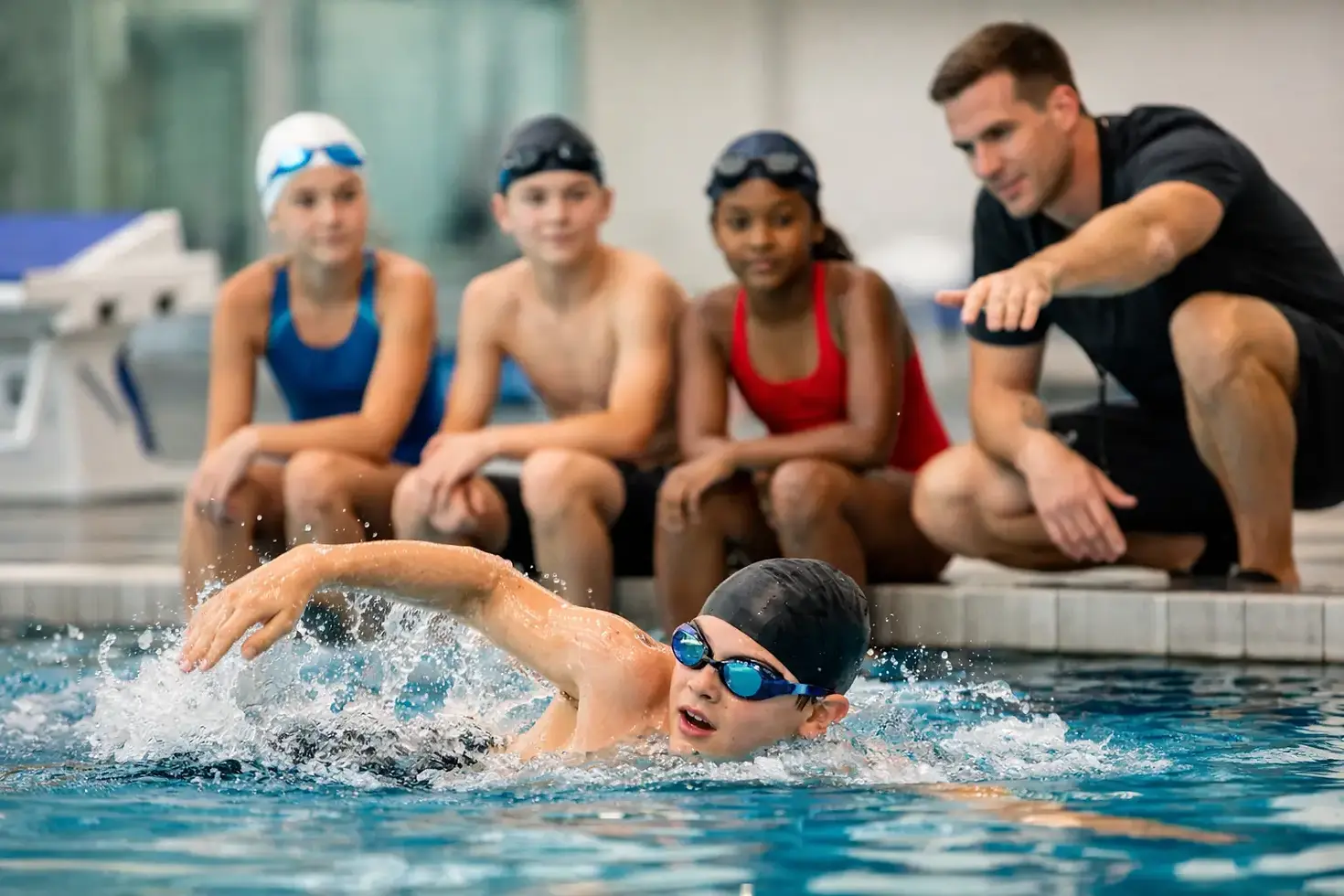
Youth Swim Conditioning Program for Stronger Swimmers

A strong youth swim conditioning program should never turn young swimmers into tired athletes with sloppy strokes. Its job is to help them hold better body position, make cleaner movements, and build the confidence to train with purpose. For families, the goal is not simply more yardage or harder workouts. It is steady development that gives swimmers the physical tools to learn, improve, and enjoy the sport for years.
What Youth Swim Conditioning Should Build
Conditioning in youth swimming is broader than endurance. A swimmer needs enough aerobic capacity to finish practice with focus, but they also need mobility, coordination, core control, and the ability to repeat quality movement. Those pieces work together in every stroke, start, turn, and streamline.
For younger swimmers, conditioning often begins with learning how to move well. Can they hold a tight streamline off the wall? Can they kick from the hips rather than bending at the knees? Can they maintain balance while breathing in freestyle? These are physical skills, not just technical instructions. A child who cannot yet control their body on land or in the water may struggle to apply coaching cues, even when they understand what to do.
As swimmers progress, conditioning can become more structured. Training may include aerobic sets, short speed efforts, kicking, underwater work, dryland strength, and mobility routines. The right mix depends on the swimmer's age, skill level, training history, and goals. A beginner needs a different challenge than a swimmer preparing for regular competition.
Technique Comes Before Fatigue
The biggest mistake in a youth swim conditioning program is treating exhaustion as proof of a good practice. Hard work matters, but tired swimmers who repeatedly lose their line, shorten their stroke, or rush their breathing can reinforce habits that are difficult to correct later.
At Alpha Swim Club, the development pathway starts with technique because efficiency gives conditioning a foundation. When a swimmer moves through the water with balance and control, each length becomes more productive. They can train longer without fighting the water, and they have a better chance of carrying strong mechanics into faster swimming.
This does not mean every practice should feel easy. It means the challenge should be purposeful. A coach may ask a swimmer to hold a precise stroke count during a moderate set, repeat fast 25s with enough rest to protect speed, or complete a kicking set that reinforces a stable body line. The swimmer is working hard, but the work has a clear performance outcome.
Quality Changes as the Swimmer Develops
Young athletes grow at different rates. A 10-year-old who has been swimming consistently for several seasons may be ready for more complex training than an older swimmer who is new to organized practice. Group placement should reflect current skills and readiness, not just age.
That is why a clear progression matters. Early groups should focus on water comfort, foundational strokes, streamlined body position, and positive practice habits. Developing groups can add greater training volume, interval awareness, legal turns, and race skills. More advanced swimmers can handle targeted aerobic work, speed development, pacing, and dryland training that supports competitive goals.
The Building Blocks of Smart Swim Conditioning
A complete program does not need complicated equipment or long dryland sessions. It needs consistency and good coaching. In the pool, swimmers should gradually develop four connected capacities: technique under pressure, aerobic fitness, speed control, and recovery habits.
Technique under pressure means maintaining useful mechanics when a set gets challenging. A swimmer may be able to perform a strong freestyle drill while fresh, then lose their catch after several repeats. Controlled conditioning teaches them to recognize that change and reset before poor movement takes over.
Aerobic fitness allows swimmers to recover between repeats and maintain attention through a full practice. For youth athletes, aerobic work should build progressively. Large jumps in volume may leave a swimmer overwhelmed, sore, or discouraged. A better approach is to add work in manageable steps while tracking whether the swimmer can still complete the set with sound technique.
Speed control is equally valuable. Not every fast repeat needs to be an all-out sprint, and not every easy repeat should become casual swimming. Learning the difference between smooth aerobic pace, strong race-pace effort, and maximum speed helps young swimmers become more aware athletes. It also makes practice more engaging because they understand what each set is asking them to do.
Recovery habits round out the process. Hydration, sleep, appropriate food, and rest days affect how a swimmer feels in the water. Parents do not need to manage every detail, but they can help by making sure practice-day routines are predictable. A swimmer arriving rushed, underfed, and tired will have a harder time getting value from training.
Dryland Should Support the Pool
Dryland conditioning can be a powerful part of youth development when it stays age-appropriate. The purpose is not to make children train like adult weightlifters. It is to improve movement quality, stability, mobility, and basic strength that transfers to swimming.
Simple exercises such as squats, lunges, planks, glute bridges, jumping patterns, shoulder mobility work, and controlled balance drills can teach young athletes how to manage their bodies. The best programs prioritize supervision and form. A fast, messy set of exercises does little for a swimmer who has not yet learned how to brace their core or land safely.
There is also a trade-off to consider. Dryland takes time and energy, especially during busy school weeks or high-volume swim periods. For a newer or younger swimmer, a short mobility and body-control routine may offer more value than an intense circuit. For a more experienced athlete, structured strength work can become increasingly useful, provided it fits their pool training and recovery needs.
Mobility Is a Performance Skill
Swimming asks a lot from shoulders, ankles, hips, and the upper back. Limited ankle flexibility can reduce kick efficiency. Restricted shoulder movement can make a relaxed recovery or strong catch more difficult. Poor hip control can cause legs to sink and create drag.
Mobility work should be regular rather than dramatic. Five to 10 focused minutes done consistently can be more helpful than an occasional long stretch session. Young swimmers should also learn the difference between normal training effort and pain. Shoulder pain, persistent joint discomfort, or unusual fatigue deserves attention from a parent, coach, and qualified health professional when needed.
How Parents Can Recognize the Right Program
A well-run youth swim conditioning program gives families more than a hard workout. Parents should see a plan for progression, coaching that explains the purpose behind training, and group expectations that match the swimmer's stage of development.
Ask how coaches balance technique and conditioning. Find out how swimmers move between groups, how practices adapt for newer athletes, and whether the program includes skill work beyond simply swimming laps. Clear answers show that the club is developing athletes, not just filling pool time.
It is also worth watching how your child feels about practice. Some challenge is healthy. Swimmers will have difficult sets, frustrating days, and skills that take time to learn. But a strong environment helps them leave practice feeling capable, supported, and motivated to return. Confidence grows when athletes understand that effort, consistency, and coachability matter as much as immediate results.
A Better Standard for Young Swimmers
The best conditioning is not the session that leaves a young swimmer completely drained. It is the training that helps them arrive at the next practice more capable than before: a little stronger through the water, a little more aware of their technique, and more ready to contribute to the team. Give young swimmers that kind of foundation, and their progress has room to keep building.


Comments